Dr. Philipp Benedikt Becker
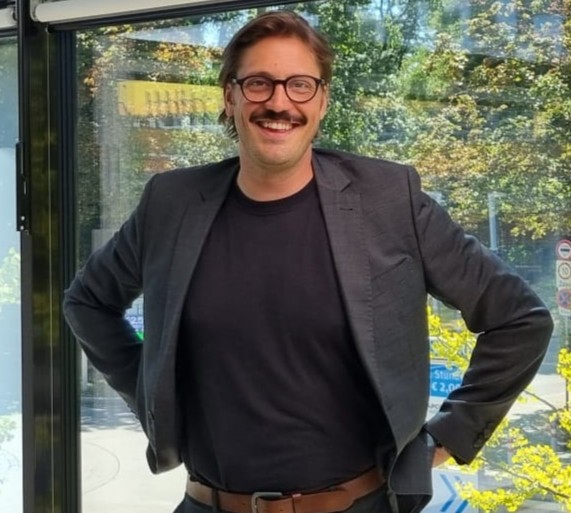
“How does managerial thinking shape firms and societies?”
This is the question I tackle as a researcher in strategy, managerial cognition, and corporate governance. I am an Assistant Professor of Strategic Management at the Utrecht University School of Economics. I received my PhD from WU Vienna, and completed a research stay at ETH Zurich. Before entering academia, I worked in M&A and consulting.

Research interests
Strategic Leadership
Firms do not move by themselves. CEOs, top management teams, and supervisory boards give them direction. Their decisions reflect what they have experienced, what they value, what they notice, and how they think. Understanding strategic leaders helps us understand the firms that shape our societies.
Managerial cognition
Strategy begins where certainty ends. Decision makers face ambiguity, complexity, and incomplete information. To move forward, they need cognitive tools: intuition shaped by prior experience, deliberation based on complex mental models, and cognitive flexibility, the ability to adapt one’s thinking when the logic of a situation changes. Managerial cognition explains how managers make strategic judgments, and how those judgments can be improved.
Corporate governance & Corporate Political Activity
Firms shape markets, public debates, and democratic processes through corporate political activity. Corporate governance determines how this influence is directed, controlled, and justified. A cognitive lens helps us understand how boards and executives interpret and enact these responsibilities. As a result, we can design governance structures that better align firm and societal interests.
Methods
Methodologically, I use natural language processing and large language models to examine how managers interpret strategic issues and how their mental models evolve. For causal identification, I rely on exogenous events that alter firms’ strategic, regulatory, or cognitive environments. These shocks allow me to study what happens when the logic of a situation changes, and how managers adapt their thinking and behavior in response.
Teaching
I teach International Business and Competitive Strategy at the master level. My teaching starts from complexity. Firms face uncertain markets, shifting institutions, and difficult trade-offs. Students need tools to make sense of this.
I use theory, cases, data, and discussion to help them structure strategic problems and develop clear decisions. The goal is simple: to train students to think strategically, argue rigorously, and act under uncertainty.
Professional Education
I also teach Applying Cognitive Science to Management at Utrecht University. The course is aimed at professionals who want to improve how they think, decide, and collaborate.
Management is cognition. Managers and professionals interpret situations. They rely on assumptions. They work through mental models. They face biases. The course helps participants reflect on these processes and use insights from cognitive science to make sharper decisions and improve team collaboration.